Welcome to My New Viaggi Blog
-
In evidenza
My First Blog Post
Be yourself; Everyone else is already taken. — Oscar Wilde. This is the first post on my new blog. I’m just getting this new blog going, so stay tuned for more. Subscribe below to get notified when I post new updates.
-
Introduce Yourself (Example Post)
This is an example post, originally published as part of Blogging University. Enroll in one of our ten programs, and start your blog right. You’re going to publish a post today. Don’t worry about how your blog looks. Don’t worry if you haven’t given it a name yet, or you’re feeling overwhelmed. Just click the… Continua a leggere
After left Ibiza we came back to Italy and went to Naples. We had only half a day for visiting and we decided to visit The Royal Palace of Caserta which is near Neaples so we got on the bus offered by MSC and leave towards Caserta.
The Royal Palace at Caserta and its park, are one of the 55 Italian UNESCO World Heritage Sites. When we arrived we ,where asthonished for its incomparable splendor.
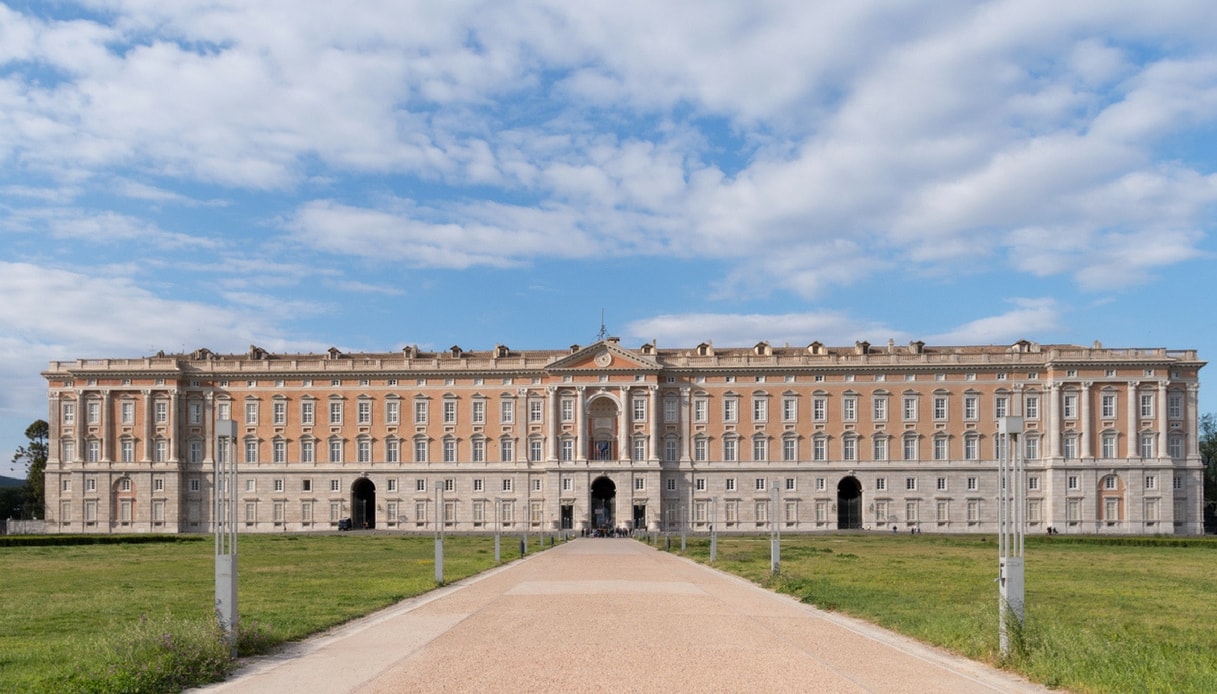
The Royal Palace at Caserta spreads out before observers as a monumental complex, on its principal façade are 143 windows, while inside, 1, 200 rooms and 34 stairways unwind throughout the palace.
Now a bit of history:
Charles VII, the Bourbon King of Naples and Sicily between 1734 and 1759 wanted to build a palace that rivaled Versailles, and in 1750 he commissioned ,the Neapolitan-born Luigi Vanvitelli the most prominent architect of 18th century Italy, to construct a royal residence in the countryside near Naples .
Charles VII laid the foundation stone in 1752 and work progressed until 1759 when he abdicated the throne and returned to rule over his native Spain following the death of the King of Spain. Vanvitelli passed away in 1773, and the construction was taken over by his son, Carlo Vanvitelli, and subsequent architects over the next century.
Now start our visit
The most scenographic setting in the Palace is probably where the atrium, the grand Royal Staircase and the chapel meet
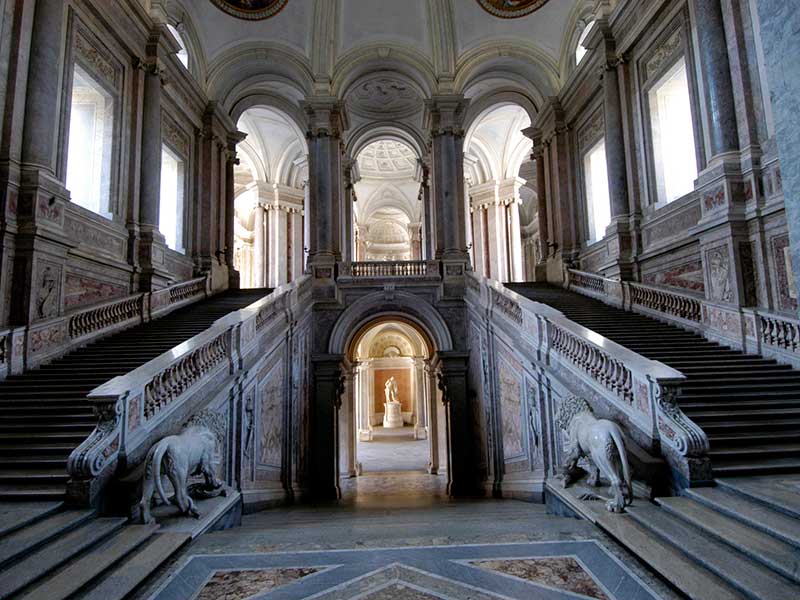
The Royal Staircase is an invention of 17th-Century scenographic arts; it connects the lower and upper vestibules, giving access to the royal apartments via the upper. The Palatine Chapel, designed by Vanvitelli, decorations and all, exhibits – more than any other environment here – strong similarities to the precedents left by Versailles.
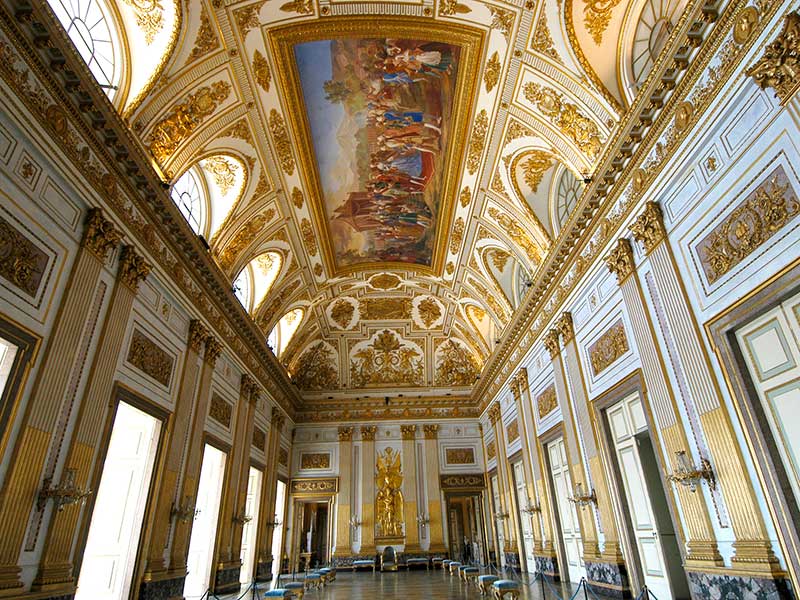
Those who see its inside are almost always astonished by its continuous succession of stuccoes, reliefs, frescoes, sulptures, flooring and inlays. Those embellishments that stand out the most are located in the Sala di Astrea, Sala di Marte and Sala del Trono; the Sala del Trono, in fact, is the largest of the interior royal apartments – it was used for the reception and accommodation of important personalities of the day.
Now the most integral aspect of this Palace’s majesty and beauty: its Park.
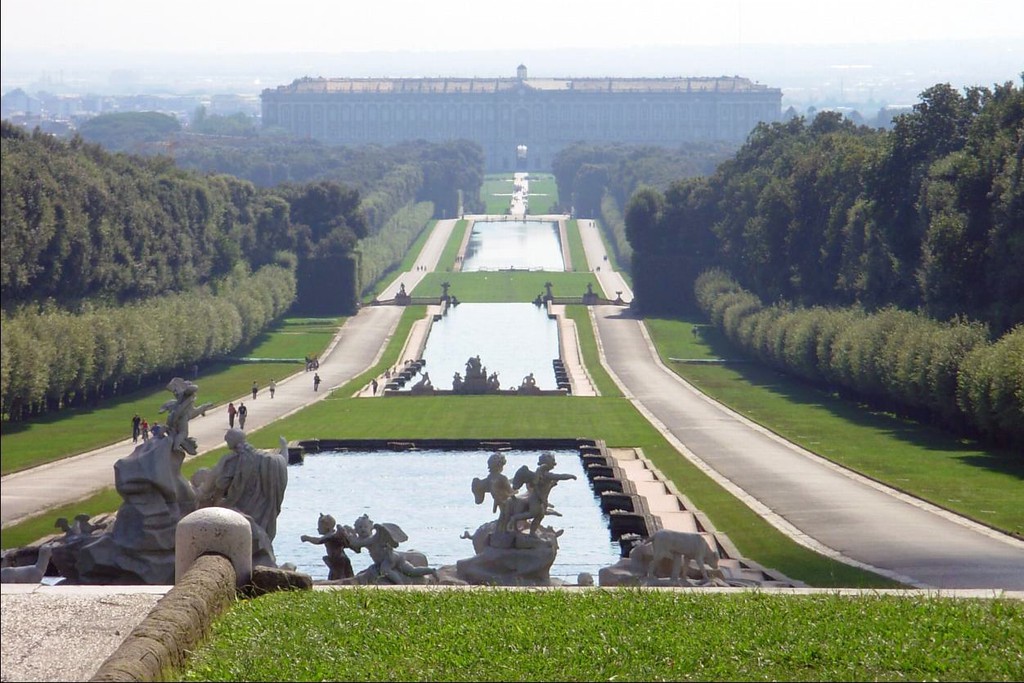
The park is a typical exemplar of the Italian garden, landscaped with vast fields, flower beds and, above all, a triumph of “water games” or dancing fountains. Along the central axis, then, is a succession of pools, fountains and cascades adorned by large sculptural groupings, all which create a unique scenographic impact that culminates with the Grand Cascade. The park extends to the summit of the hill opposite the Palace, where an English garden perfectly frames an arrangement of exotic plants.
We visited this spledind park by a bus which led us from the Palace to the Grand Cascade.
Follow My Blog
Get new content delivered directly to your inbox.
 mio
mio 